By Drying Notes · Reviewed October 18, 2026 · US-market research
Identify the function before the label
Names such as hot brush, dryer brush and thermal brush are not a complete specification. Look for documented airflow and the model’s stated purpose. Do not transfer a wet-hair use claim from a drying tool to a heated tool with a similar shape.
Check the instructions for your starting point
A routine that begins with wet hair asks a different question from touching up already dry hair. The exact tool’s instructions should decide whether your starting point is supported. If that information is unavailable, keep the tool out of that routine until confirmed.
Compare dimensions and controls
Record barrel dimensions, airflow if present, heat controls, attachment options and regional electrical requirements. Choose on the task those facts support, rather than a universal temperature recommendation or a broad salon-results slogan.
A dryer may still be the simpler choice
If the task is drying with a diffuser, start with a dryer and compatible attachment. If the task is shaping hair with a barrel, investigate an explicitly supported styling tool. This guide explains the distinction; it does not claim that we have tested or ranked brush models.
Two named examples, two different decisions
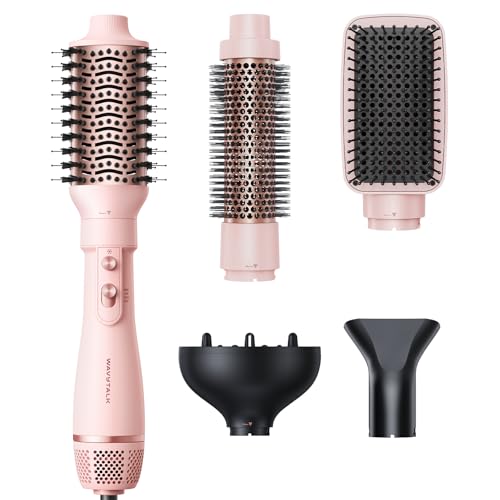
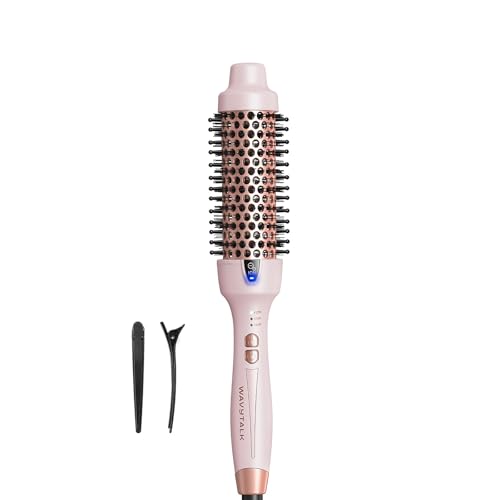
The selected Air Sculpt 5-in-1 listing describes airflow and towel-dried damp-hair styling. The selected Blowout Express 1.5-inch listing describes a heated barrel with three temperature settings; wet-hair drying is not established for that option. The marketplace category does not settle the distinction. Do not borrow one tool’s voltage, hair-state instructions or heat settings for the other.
| Question | Evidence to find | Why it matters |
|---|---|---|
| Does it produce airflow? | Check the exact specification | Distinguishes a drying function |
| What hair state is permitted? | Read the model’s instructions | Do not infer wet-hair compatibility |
| Does the barrel fit the task? | Record actual dimensions | Shape alone does not establish suitability |
| Can attachments change? | Check supported parts | Do not assume cross-model interchangeability |
| Air Sculpt 5-in-1 Blush | Airflow set; damp-hair description | US 125V; source wattage conflict |
| Blowout Express 1.5-inch Millennial Pink | Three-setting heated-barrel tool | Wet-hair drying and numeric voltage range not established |
Put the check to a specific option
For a side-by-side choice between these exact tools, compare Air Sculpt with the three-setting Blowout Express.
If you need airflow while shaping with a brush, Check Air Sculpt’s damp-hair description and power conflict.
If you are comparing a heated-barrel tool instead, inspect the exact three-setting Blowout Express.
Common questions
Can a thermal brush replace a hair dryer?
Only if its documented function supports the task. A heated surface alone does not establish a drying function.
Which product notes help explain the difference?
Read the Air Sculpt airflow-set note and the three-setting Blowout Express thermal-brush note. Their documented functions differ; neither is a tested best-for-fine-hair winner.